Teaching Narratives: How to Teach a Child to Tell a Story in 5 Steps
Ask a child what they did over the weekend and you might hear something like: “We went… and there was a dog… and then my brother… it was funny.” You can tell something happened. You just can’t quite piece together what.
Telling narratives is one of those skills we use all day long without thinking about it. We tell stories when we explain what happened at recess, recount a movie to a friend, or tell a parent why we’re upset. For kids with language difficulties, though, organizing a story so someone else can follow it is hard work.
And it matters well beyond conversation. Narratives are one of the core discourse structures kids need for reading and writing. A child who can’t organize a story out loud is going to have a much harder time understanding stories they read or writing one for a class assignment. When we build narrative skills in spoken language, we’re laying the foundation for literacy.
The good news? Teaching narratives doesn’t have to be complicated. In this post, I’ll walk you through the exact 5-step process we use in the SLK Curriculum to take a child from answering simple questions about a story all the way to planning and telling their own original stories. Whether you’re an SLP, a teacher, or a parent, you can use this process starting today.

What Are the Parts of a Narrative?
Before we start teaching narratives, it helps to know exactly what we’re teaching. A narrative is simply a story: something that happened, told in order. Strong narratives, whether they’re fairy tales or a recap of a trip to the grocery store, include five key story elements:
- Characters: The people, animals, or creatures in the story.
- Setting: Where and when the story happens.
- Problem: What goes wrong, or the challenge the characters face.
- Events: The actions or steps the characters take, told in order.
- Resolution: How the problem gets solved or how the story ends.
When a child leaves out one of these pieces, the listener gets lost. Telling narratives well also depends on transition words like first, next, then, and finally, which act as signposts that help the listener follow along.
You’ll notice these five elements show up in every step below. We keep them consistent on purpose. Using the same words every time helps kids build a mental map they can rely on.
The 5-Step Process for Teaching Narratives
The key to this process is that each step builds on the one before it. Kids learn to understand stories before they retell stories, and they retell stories before they create their own. Stay on each step until the child can do it consistently, then move on.
Step 1: Answer Questions About a Narrative
We start with comprehension. Before a child can tell a story, they need to understand one. Read a short story aloud (or have the child read it), then ask two kinds of questions:
- Literal questions: The answer is right there in the story. (“Who is the main character?”)
- Inferential questions: The child uses clues from the story plus what they already know. (“Why did the character feel sad?”)
Try it: “Max went to the park with his dog, Bella. Max threw a stick, and Bella ran to fetch it. Suddenly, Bella stopped and barked at a squirrel. Max laughed and called Bella back. Max was grinning from ear to ear on their way home.”
- Literal: Who went to the park? What did Max throw? What did Bella bark at?
- Inferential: Why do you think Bella barked at the squirrel? How did Max feel at the end? How do you know?
Keep practicing: Reread the same story and come up with new questions. Then try a familiar fairy tale like Goldilocks and the Three Bears (“Why do you think Goldilocks ran away?”), and eventually a brand-new story from a book or class materials.
Step 2: Identify the Story Elements
Now we introduce the five story elements: characters, setting, problem, events, and resolution. The child’s job is to find each one in a story they hear.
Try it: “Anya wanted to bake a cake for her mom’s birthday, but she didn’t have any eggs. She went to the store but realized she forgot her wallet. Luckily, her neighbor lent her some eggs, and Anya baked a delicious cake just in time for the party.”
Ask: Who is in the story? Where and when does it happen? What goes wrong? What steps does Anya take? How is the problem solved?
Keep practicing: Have the child point to the part of the text where each element appears. Then practice with familiar stories like The Three Little Pigs or Little Red Riding Hood before moving to new ones.
Step 3: Sequence the Events
A story only makes sense if the events are in the right order. In this step, we teach sequencing and the transition words that go with it:
- First: What happened at the beginning?
- Next / Then: What happened after that?
- Finally / Last: What happened at the end?
Try it: Read a short story (like Arjun trying to fly a tangled kite), then write each event on a separate slip of paper. Mix them up and have the child put them back in order. Physically moving the pieces around makes sequencing concrete.
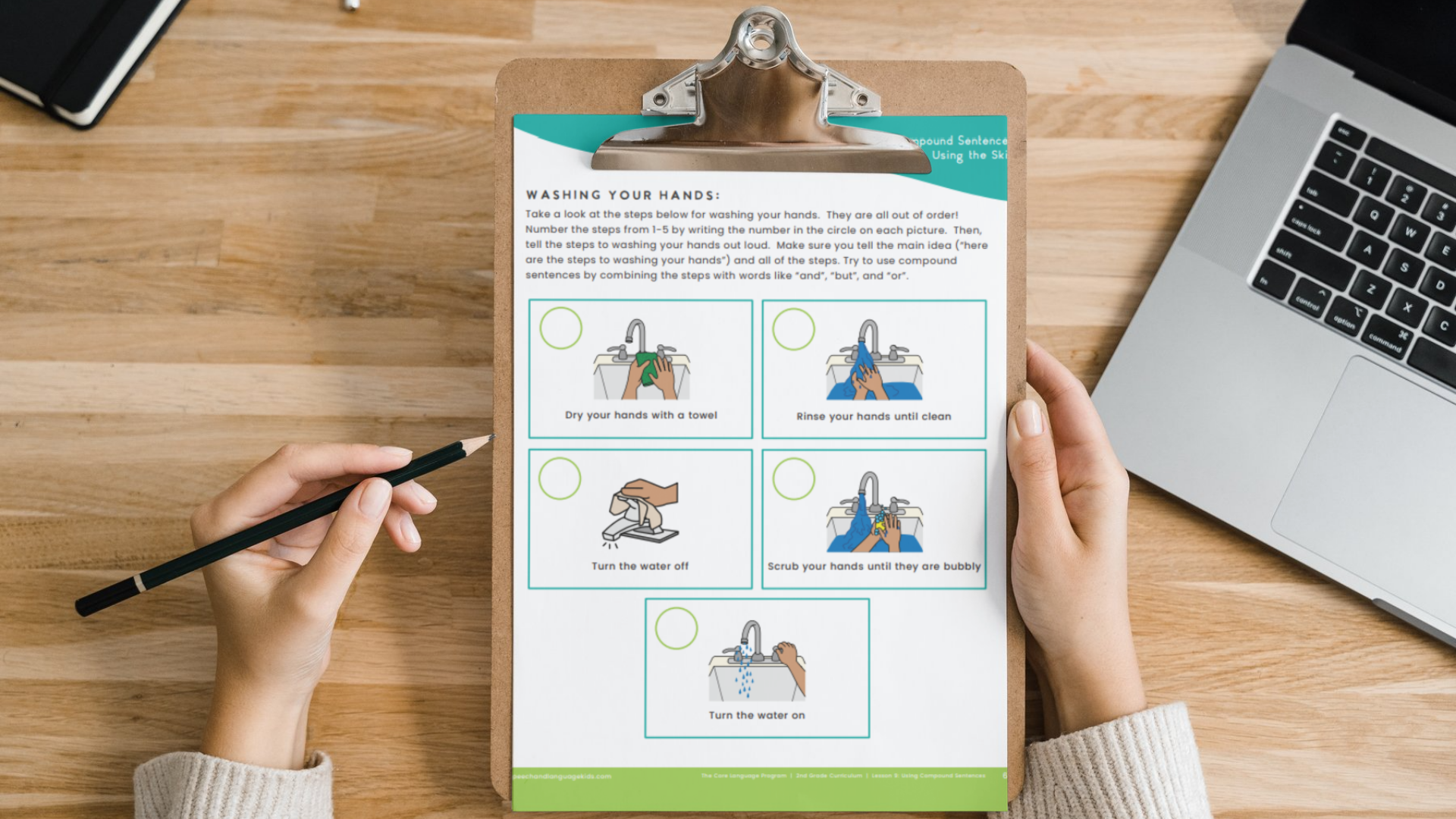
Keep practicing: Sequence everyday routines like washing hands or making a bowl of cereal. Act them out, draw them, or say them aloud. Then try retelling the main events of Jack and the Beanstalk using first, next, then, and finally.
Step 4: Retell a Narrative
This is where everything comes together. The child hears a story and retells it in their own words, including all five story elements in the right order.
The secret weapon here is a story map: a simple graphic organizer with boxes for Characters, Setting, Problem, Event 1, Event 2, Event 3, and Resolution. The child fills in the map first, then uses it as a visual guide while retelling.
Try it: “Maria wanted to plant flowers in her garden, but it was overgrown with weeds. She first cleared the weeds from a small patch of dirt. Then she planted flower seeds. After that, she watered them every day. After a few weeks, the flowers grew, and Maria was proud of her beautiful garden.”
Have the child fill in the story map, then retell Maria’s story to you using the map.
Keep practicing: Retell the story to a parent, teacher, or friend. Make story maps for favorite fairy tales, then for new stories or book chapters. Kids can tell the retell out loud, write it down, or even act it out.
Step 5: Plan and Tell Their Own Narrative
The final step is the big one: telling narratives the child creates themselves. We break this into two parts.
Part 1: Plan it. Using a planning page, the child answers:
- Characters: Who is the story about? What are they like?
- Setting: Where and when does it happen?
- Problem: What’s the main challenge?
- Events: First… next… then… finally…
- Resolution: How does it end?
Part 2: Tell it. Using the planning page as a guide, the child tells (or writes) the story, making sure to include every story element and use transition words.
Keep practicing: Have the child illustrate their story and use the pictures to retell it. Challenge them to change the ending. Or have two kids build a story together, with one creating the beginning and the other the ending. And when they get stuck for ideas, a fun picture can be the perfect story starter.