Topic:
Resource Type:
Results:

Early Intervention Speech Therapy Activities
Early Intervention Speech Therapy Activities How can we help little ones (birth - 3 years) learn to speak? How can we improve their social interaction skills and their ability to communicate their basic wants and needs? And how can we help reduce frustration for child AND parents?
How to Deal with Challenging Behaviors in the Classroom and Speech Therapy Room
Today we are joined by Karli Koning from http://www.behaviorpc.com/ to talk about challenging behavior problems in children. Karli explains how to figure out the function of a child’s behavior and use that information to help correct it.Listen to the interview here or keep scrolling to view the notes:
Inferencing | Speech Therapy Goals and Activities
Inferencing | Speech Therapy Goals and Activities How can we teach inferencing in speech therapy? What goals should we write for inferencing? An inference is when you use clues present (in text or in real life) along with your background knowledge to make a guess about something that's

9 Co-Teaching and Push-In Therapy Models that Work
Are you struggling to know the best way to do push-in therapy or co-teach? I've put together the top 9 models for co-teaching and push-in therapy for speech therapists and other professionals. Watch the video for explanations and click the button below to download the handout with all 9
Using Video Modeling For Kids With Autism
What is Video Modeling? Video modeling is a fun instructional technique where the child watches a video of himself or herself doing a desired behavior or skill. For example, let’s say Johnny always throws a fit on the way from the bus to his classroom at the beginning of
Tips for Productive Group Speech Therapy Sessions
Having trouble making your group therapy session run smoothly? Check out this video with four different approaches to group therapy plus tips for managing student behavior, collecting data, and starting your sessions off smoothly. To Download the Slides from this Video for Free, Click the Button
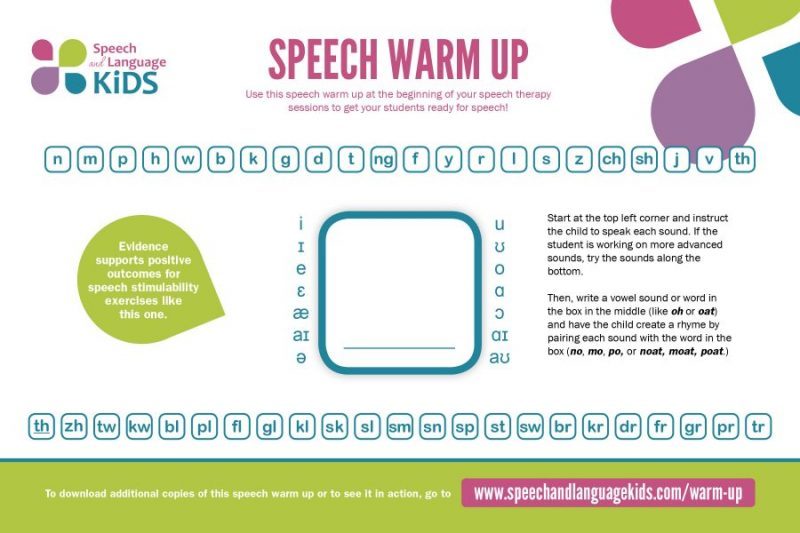
Speech Therapy Warm-Up
Still doing Non-Speech Oral Motor Exercises for Warm-Ups? Try this instead!! Click Here to Download a PDF of the Warm-Up Need some sources for this info? Dr. Loff shared these with me: http://lshss.pubs.asha.org/article.aspx?articleid=1778841 http://www.researchgate.net/publication/248844490_Oral_Motor_Exercises_and_Treatment_Outcomes http://europepmc.org/abstract/med/19058121 http://www.citeulike.org/group/18272/article/12798999 http://sig16perspectives.pubs.asha.org/article.aspx?articleid=1761803 http://lshss.pubs.asha.org/article.aspx?articleid=1779061 Speech sounds that are stimulable are more likely to improve without
Productivity Hacks for Speech Therapists
Making Your Job a Little Easier Are you drowning in paperwork? Do you have too many kids on your caseload? Do you feel like you spend more time on paperwork and meetings than you do with your students/clients? Would you like to feel like a more effective speech therapist? If
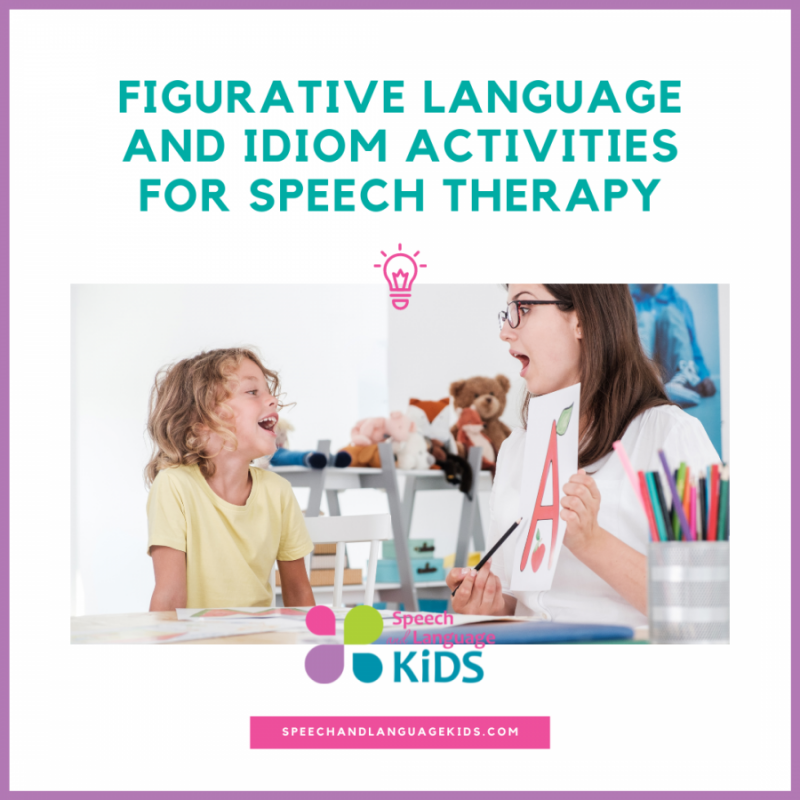
Figurative Language Examples and Speech Therapy Activities
Figurative Language Examples and Speech Therapy Activities Have you been bending over backwards trying to teach your students figurative language? Are they left high and dry when idioms are used in their classrooms? Well I’m going to take the bull by the horns and knock your socks off with
How to Help your Child with Teasing
“You’re kid sounds funny” “He’s so weird” “What’s wrong with that kid?” “Why is he doing that?” “Is she dumb or something?” Sticks and stones may break bones but words can be just as painful if you are the parent of a child with special needs. Those insults may
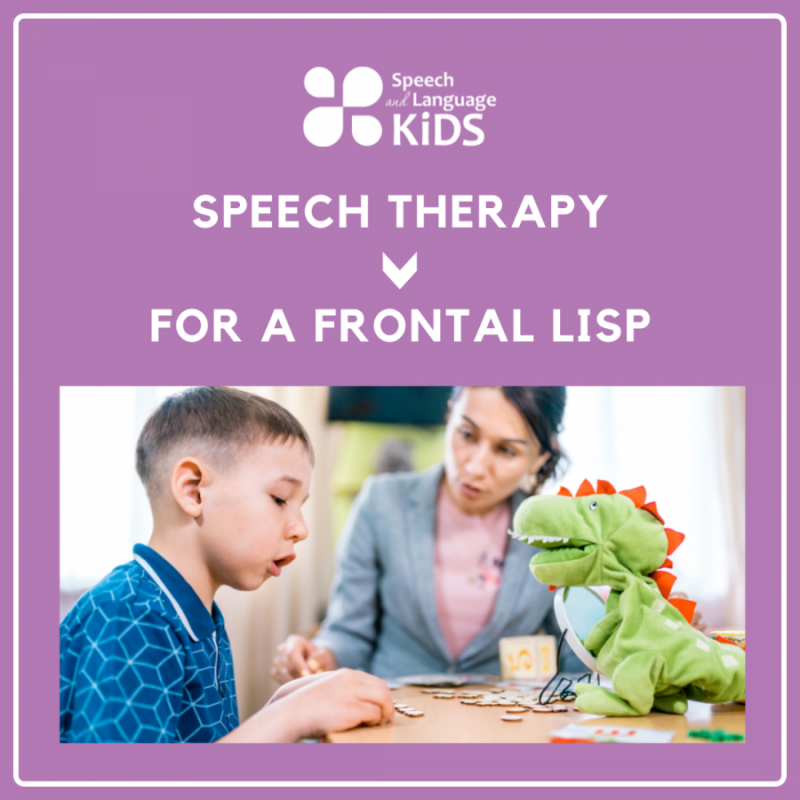
Frontal Lisp/Interdental Lisp | Speech Therapy Ideas & Word Lists
Frontal Lisp / Interdental Lisp | How to Fix it A frontal lisp, or interdental lisp, occurs when a child pushes their tongue out between their teeth on sounds like /s/, /z/, "sh", and "ch". We can help these children fix their speech errors with speech therapy techniques.
Final Consonant Deletion | Activities, Words, and Goals
Final Consonant Deletion | Activities, Words, and Goals Final consonant deletion is a phonological process (pattern of speech errors) where a child drops off the ending consonants of all words. Final Consonant Deletion Examples: “dog” becomes “dah” “cat” becomes “ca” And “Please Mom, can I eat some eggs and
How to Teach a Child to Form Narratives
Summary: Explicitly teach narrative structure to children: Introduction: settings and characters Details/Body: Use first, next, then, and last to describe the details in order. Make sure the problem is presented in this section. The solution can go in here as well or in the next section. Conclusion: The

The Magic Formula to Teach a Child Any New Skill (By Fading Supports)
The inspiration for this post came to me while I was laying in my 10-month-old’s crib with him. Yeah, I’m that mom. But let me explain! My sweet baby boy was an excellent sleeper until he hit the 6-month mark. Then, suddenly we went from one night waking to

Phonological Awareness Hierarchy, Skills, and Goals
Phonological Awareness Hierarchy and Speech Therapy Goals Rhyming, alliteration, syllabification, blending, etc. These phonological awareness skills are crucial to literacy and reading success. This page will give you the hierarchy of phonological awareness skills and the order in which to teach them. Plus, we'll show you how to
Generalization for Speech Therapy | Help Clients Self-Monitor and Carry-Over Skills
Generalization for Speech Therapy | Help Clients Self-Monitor and Carry-Over Skills "They can do it in speech therapy, but they're not carrying it over to the classroom!" How many times have you said this? Carry-over and generalization skills are sometimes the hardest to teach because the client CAN do
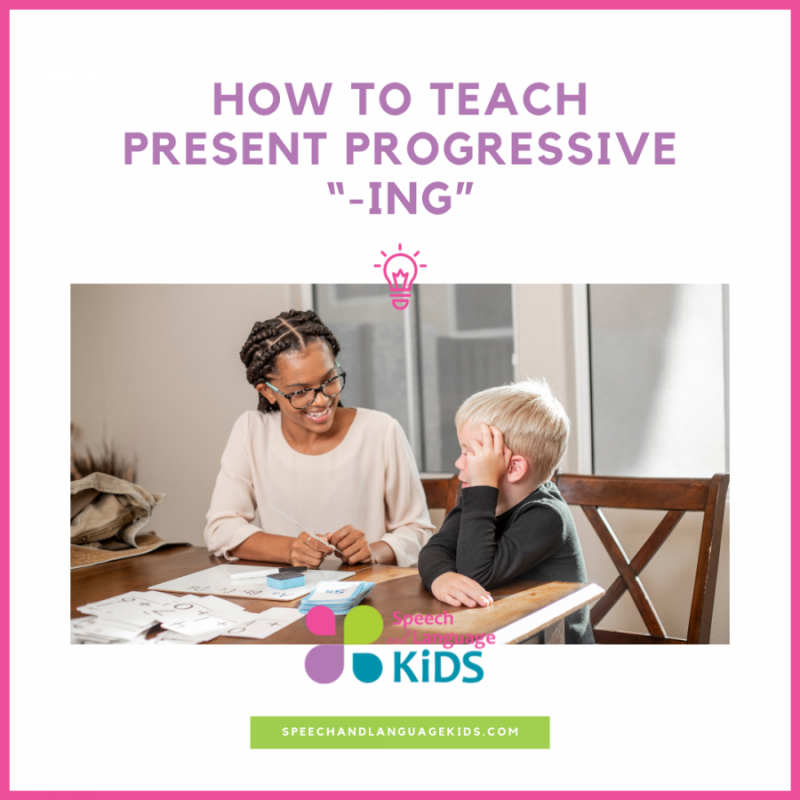
Present Progressive “-ing” | Speech Therapy Activities for Progressive Verbs
Present Progressive "-ing" | Speech Therapy Activities for Progressive Verbs She is jumping. He is running. How can we teach children to use the present progressive "-ing" verb tense? On this page, we'll give you a simple, step-by-step process for teaching present progressive "-ing" verbs to children. We'll

How to Teach the /r/ Sound with Christine Ristuccia
In episode 24 of the Speech and Language Kids Podcast, Carrie Clark interviews speech-language pathologist Christine Ristuccia, founder of "Say it Right" about how to teach that tricky /r/ sound. This is great information for parents or SLPs! Who Is Christine Ristuccia? Christine Ristuccia, M.S., C.C.C.-S.L.P. is an
Phonological Processes: Definition, Examples, and Therapy
Phonological Processes: Speech Therapy and Activities: When children are learning to speak, they use specific patterns to simplify harder sounds. They may drop off certain sounds to make a word shorter. Or they may swap harder sounds out for easier ones. These error patterns are called phonological processes. They
Apraxia of Speech: Speech Therapy Approach by Nancy Kaufman
Teaching Adjectives to Children: Activities and Worksheets for Helping Kids Learn Adjectives Childhood Apraxia of Speech (CAS) is a rare, neurologically-based speech disorder where the child knows what he wants to say but the message gets mixed up in the motor-planning and execution phase so the sounds come
Podcast: Play in new window | Download | Embed